
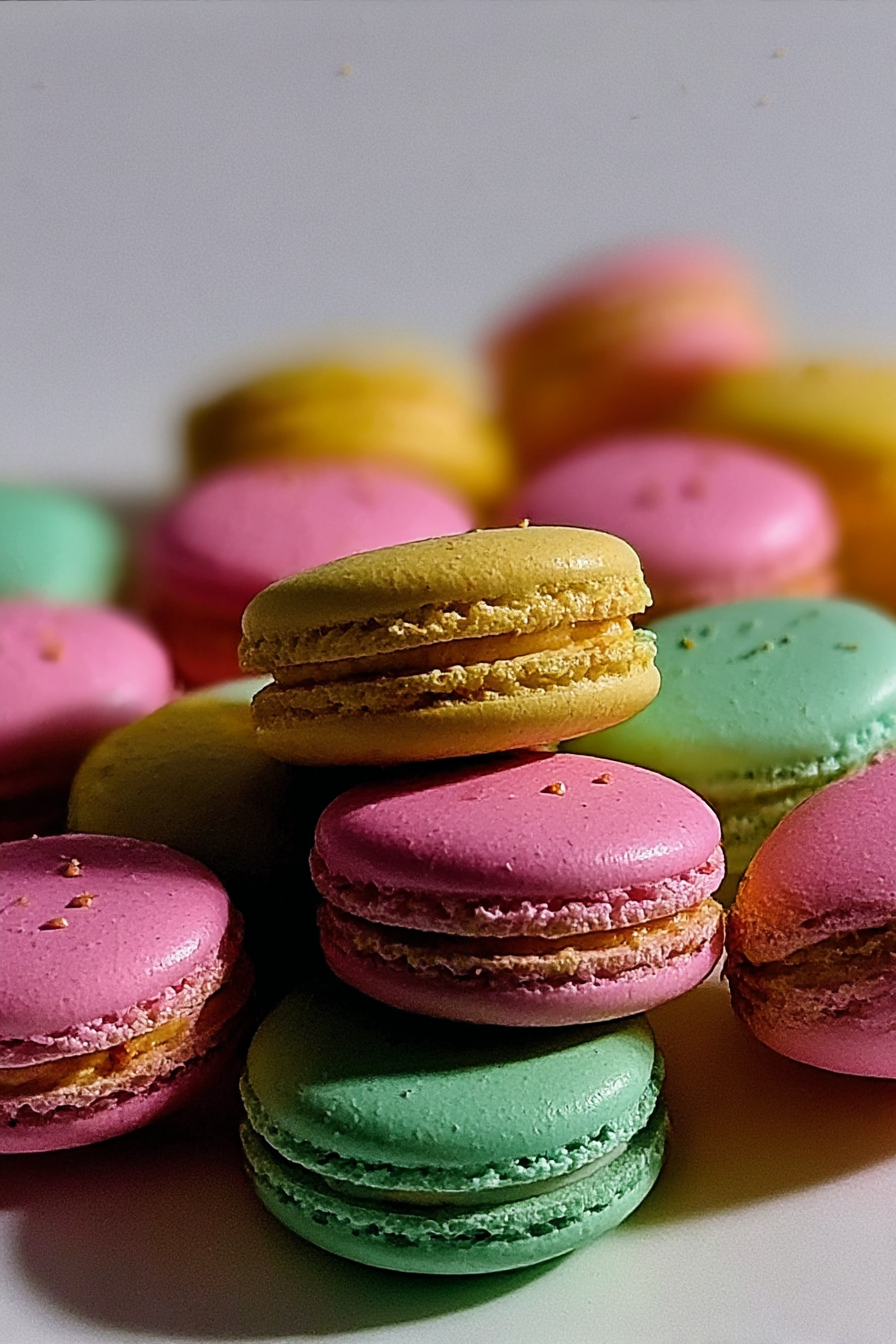
Ah, the macaron. Those delicate, colorful little cookies that often strike fear into the hearts of even seasoned bakers. But fear not, dear becucumber waterers! We’re about to embark on a journey to create an Easy Macaron for Becucumber waterers.
Imagine biting into a perfectly chewy, almond-flavored shell, giving way to a smooth, delectable filling. It’s a symphony of textures and tastes that’s surprisingly achievable, even for those of us who occasionally set the smoke alarm off while boiling water.
- Effortless Preparation: Achieve perfect macarons without complicated techniques or specialized equipment.
- Exquisite Flavor: Indulge in a delightful blend of almond and your favorite filling flavors.
- Visually Stunning: Create a batch of colorful macarons that will impress everyone.
- Incredibly Versatile: Customize your macarons with endless flavor and color combinations to suit any occasion.
Ingredients for Easy Macaron for Becucumber waterers
Here’s what you’ll need to make this delicious dish:
The full ingredients list, including measurements, is provided in the recipe card directly below.
How to Make Easy Macaron for Becucumber waterers
Follow these simple steps to prepare this delicious dish:
Step 1: Prepare the Almond Flour Mixture
In a food processor, combine almond flour and powdered sugar. Process until finely ground, then sift the mixture to remove any lumps. This ensures a smooth macaron shell.
Step 2: Whip the Meringue
In a clean, grease-free bowl, beat the egg whites with an electric mixer until soft peaks form. Gradually add the granulated sugar and continue beating until stiff, glossy peaks form. Add gel food coloring and Alcohol-free vanilla extract, mixing until evenly combined.
Step 3: Macaronage
Gently fold the almond flour mixture into the meringue in three additions. Use a spatula to carefully combine the ingredients, using a folding motion. The batter is ready when it flows slowly off the spatula in a ribbon and slowly dissolves back into the batter (this is known as the “lava” consistency).
Step 4: Pipe the Macarons
Transfer the batter to a piping bag fitted with a round tip. Pipe small, even circles (about 1.5 inches in diameter) onto baking sheets lined with parchment paper or silicone mats. Leave some space between each macaron.
Step 5: Rest the Macarons
Tap the baking sheets firmly on the counter several times to release any air bubbles. Let the macarons rest at room temperature for 30-60 minutes, or until a skin forms on the surface. This is crucial for developing the “feet” during baking.
Step 6: Bake the Macarons
Preheat oven to 300°F (150°C). Bake the macarons for 12-15 minutes, or until they have risen and developed “feet.” Let them cool completely on the baking sheets before removing.
Step 7: Fill the Macarons
Once the macaron shells are completely cool, pair them up by size and shape. Pipe your desired filling onto the flat side of one shell and gently sandwich it with another shell.
Step 8: Chill and Serve
Place the filled macarons in an airtight container and refrigerate for at least 24 hours. This allows the flavors to meld and the macarons to soften slightly. Serve chilled and enjoy these Easy Macaron for Becucumber waterers!
Perfecting the Cooking Process

First, meticulously measure all ingredients for accuracy. Combine the dry ingredients before incorporating the wet. Ensuring your oven is preheated to the correct temperature is paramount for achieving that perfect macaron shell. This streamlined approach leads to bakery-worthy results every time.
Add Your Touch
Want to spice things up? Consider adding a dash of citrus zest to the batter for a vibrant flavor boost. Alternatively, experiment with different extracts like almond or vanilla. A sprinkle of edible glitter never hurt anyone either. Let your creativity run wild!
Storing & Reheating
These delicate cookies are best stored in an airtight container in the refrigerator. They can be enjoyed chilled or brought to room temperature before serving. Avoid freezing, as this can compromise their texture. Fresh is always best!
Here are some tips to guide you on your macaron journey:
- Always use aged egg whites for the best meringue consistency, which helps create that signature macaron “foot.”
- When piping, apply consistent pressure and use a template to ensure uniform size for even baking.
- Rest the piped macarons before baking to form a skin; this prevents cracking during baking.
(Personal anecdote formated as paragraph subheading)
I remember the first time I attempted macarons. They looked like deflated pancakes! But after a few tweaks and a lot of persistence, I finally nailed it. Now, they’re my go-to for special occasions.
The Sweet Symphony of Macarons: A Culinary Adventure
Macarons. Just the word itself sounds fancy, doesn’t it? These delicate, colorful cookies are the prima donnas of the baking world. They’re notoriously difficult to master, often intimidating even the most seasoned bakers. But fear not, fellow food enthusiasts! This isn’t your grandma’s complicated, multi-day macaron recipe. We’re diving into the realm of **easy macaron for becucumber waterers**, a simplified approach that proves you don’t need a Michelin star to whip up these delightful treats.
Think of it like this: you’re embarking on a baking adventure, armed with a spatula and a can-do attitude. We’re going to demystify the process, break down the steps, and sprinkle in a healthy dose of humor along the way. Because let’s be honest, baking should be fun! And even if your first batch looks like it was attacked by a rogue whisk, that’s okay! We’ll learn from our mistakes and keep going until we achieve macaron perfection, or at least something close enough to impress your friends.
Understanding the Macaron Mystique: What Makes Them So Special?
Before we dive into the recipe, let’s understand why macarons are so revered (and feared!). These little cookies are essentially meringue-based sandwiches, made with almond flour, egg whites, and sugar. The magic happens when these ingredients are combined, piped onto a baking sheet, and baked to ethereal perfection.
The key to a perfect macaron lies in the “foot,” that characteristic ruffled edge that forms during baking. Achieving this foot requires a delicate balance of ingredients, technique, and oven temperature. It’s like a culinary tightrope walk, where one wrong move can send your macarons tumbling into flat, cracked oblivion.
But don’t let that scare you! Our **easy macaron for becucumber waterers** recipe simplifies the process without sacrificing the essential elements that make macarons so special. We’ll focus on the key techniques and provide tips to help you avoid common pitfalls.
The Players in Our Macaron Orchestra: Ingredients You’ll Need
Here’s what you’ll need to conduct your macaron symphony:
- Almond Flour: This is the foundation of our macarons, providing a delicate, nutty flavor and a slightly chewy texture. Make sure to use finely ground almond flour for the best results.
- Powdered Sugar: Also known as confectioners’ sugar, this adds sweetness and helps create a smooth, glossy shell.
- Egg Whites: The backbone of our meringue, providing structure and lift. Aging the egg whites is crucial for achieving the right consistency (more on that later!).
- Granulated Sugar: Used to stabilize the meringue and add sweetness.
- Food Coloring: Because macarons should be as vibrant and colorful as your personality! Gel food coloring is recommended for the best results.
- Your Favorite Filling: From buttercream to ganache to fruit preserves, the possibilities are endless! Get creative and choose a filling that complements the flavor of your macarons.
Assembling Your Macaron Toolkit: Essential Equipment
Before you start mixing, make sure you have the following equipment on hand:
- Stand Mixer or Hand Mixer: For whipping up that glorious meringue.
- Sifter: To ensure your almond flour and powdered sugar are lump-free.
- Piping Bag and Round Tip: For creating those perfectly uniform circles.
- Baking Sheets: Line them with parchment paper or silicone baking mats to prevent sticking.
- Macaron Template (Optional): This can help you pipe consistent sizes and shapes. You can find printable templates online.
- Oven Thermometer: Because oven temperatures can be sneaky.
Let the Baking Games Begin: Step-by-Step Instructions for Easy Macarons
Alright, let’s get down to business! Here’s the **easy macaron for becucumber waterers** recipe, broken down into simple, manageable steps:
Step 1: Aging the Egg Whites (Yes, It’s a Thing!)
This is a crucial step that many people skip, but trust me, it makes a difference. Separate your egg whites a day or two in advance and store them in an airtight container in the refrigerator. Aging the egg whites allows some of the moisture to evaporate, resulting in a more stable meringue.
Step 2: The Dry Ingredient Tango: Sifting and Combining
In a large bowl, sift together the almond flour and powdered sugar. This ensures that there are no lumps and that the mixture is light and airy. Discard any large almond pieces that remain in the sifter.
Step 3: Meringue Magic: Whipping Those Whites
In a clean, grease-free bowl, beat the egg whites with a mixer until soft peaks form. Gradually add the granulated sugar, continuing to beat until stiff, glossy peaks form. The meringue should be firm enough to hold its shape.
Step 4: Color Me Happy: Adding Food Coloring
Add your desired food coloring to the meringue, mixing until evenly distributed. Be careful not to overmix, as this can deflate the meringue.
Step 5: The Macaronage: The Art of Folding
This is where things get a little tricky. Gradually add the dry ingredients to the meringue, folding gently with a spatula. The goal is to deflate the meringue slightly while still maintaining some air. The batter should be smooth and flow like lava. This process of folding is called macaronage.
The consistency is key here. To test if your batter is ready, drop a small amount back into the bowl. It should slowly sink back into the batter within 20-30 seconds. If it doesn’t, continue folding until the correct consistency is reached.
Step 6: Piping Perfection: Creating Those Circles
Transfer the batter to a piping bag fitted with a round tip. Pipe even circles onto your prepared baking sheets, using a macaron template as a guide if desired.
Step 7: The Resting Period: Letting Them Breathe
Once you’ve piped all the macarons, tap the baking sheets firmly on the counter to release any air bubbles. Then, let the macarons rest at room temperature for 30-60 minutes, or until a skin forms on the surface. This is crucial for preventing cracking during baking. You should be able to gently touch the surface of the macaron without it sticking to your finger.
Step 8: Baking to Perfection: The Oven’s Embrace
Preheat your oven to the specified temperature. Bake the macarons for the specified time, rotating the baking sheets halfway through. The macarons are done when they have formed a foot and are slightly firm to the touch.
Step 9: Cooling and Filling: The Final Touches
Let the macarons cool completely on the baking sheets before removing them. Once cooled, match up the macarons by size and shape, then fill them with your favorite filling.
Step 10: Patience is a Virtue: The Maturation Process
This is the hardest part of all! Wrap the filled macarons in plastic wrap and refrigerate them for at least 24 hours. This allows the flavors to meld and the macarons to develop their signature chewy texture.
Troubleshooting Macaron Mayhem: Common Problems and Solutions
Even with the **easy macaron for becucumber waterers** recipe, things can still go wrong. Here are some common problems and how to fix them:
- Cracked Shells: This is usually caused by not letting the macarons rest long enough before baking or baking them at too high a temperature.
- No Feet: This can be caused by overmixing the batter, using old egg whites, or not resting the macarons long enough.
- Hollow Shells: This can be caused by undermixing the batter or baking the macarons at too low a temperature.
- Flat Macarons: This is usually caused by overmixing the batter or using too much liquid in the filling.
Remember, practice makes perfect! Don’t be discouraged if your first batch isn’t perfect. Keep experimenting and learning, and you’ll be a macaron master in no time. These almond delights are definitely easier to make than you may think.
Flavor Fantasies: Unleashing Your Inner Macaron Artist
Now that you’ve mastered the basic macaron recipe, it’s time to unleash your inner artist and experiment with different flavors and colors.
- Flavor the Meringue: Add extracts, spices, or citrus zest to the meringue for a subtle flavor infusion.
- Color the Shells: Use gel food coloring to create vibrant and colorful macarons.
- Experiment with Fillings: The possibilities are endless! Try buttercream, ganache, fruit preserves, or even savory fillings like cream cheese or pesto.
- Decorate Your Macarons: Use edible glitter, sprinkles, or chocolate drizzles to add a touch of sparkle and whimsy.
Conclusion for Easy Macaron for Becucumber waterers :
So, there you have it! Easy macarons, demystified and ready for your becucumber waterer-level baking skills. While they might look fancy, this recipe proves that anyone can achieve macaron magic. Remember to whisk with gusto, be patient during the drying process, and don’t be afraid to experiment with different fillings. Most importantly, have fun! A perfectly imperfect macaron is still a delicious macaron, and the joy of creating these little treats is the sweetest reward of all. Now, go forth and macaron!
Print
Easy Macaron for Becucumber waterers
Delicious easy macaron for becucumber waterers recipe with detailed instructions and nutritional information.
- Total Time: 35 minutes
- Yield: 4 servings
Ingredients
- Almond Flour with 100g measurement
- Powdered Sugar with 100g measurement
- Egg Whites (aged) with 55g measurement
- Granulated Sugar with 50g measurement
- Vanilla Extract with 1/2 tsp measurement
- Food Coloring (gel) with a few drops measurement
- Pinch of Cream of Tartar
Instructions
- Step 1: Sift together almond flour and powdered sugar into a large bowl. Discard any large pieces.
- Step 2: In a separate, clean, grease-free bowl, beat egg whites with cream of tartar until soft peaks form. Gradually add granulated sugar and continue beating until stiff, glossy peaks form.
- Step 3: Gently fold the dry ingredients into the meringue in three additions, using a spatula. Add food coloring and vanilla extract during the last addition of dry ingredients. Macaronage: continue to fold until the batter flows like lava from the spatula and a figure 8 can be drawn without breaking.
- Step 4: Transfer the batter to a piping bag fitted with a round tip. Pipe small, even circles onto a baking sheet lined with parchment paper or a silicone mat.
- Step 5: Tap the baking sheet firmly on the counter several times to release any trapped air bubbles. Let the macarons rest at room temperature for 30-60 minutes, or until a skin forms on the surface.
- Step 6: Preheat oven to 300°F (150°C). Bake for 12-15 minutes, or until the feet have formed and the macarons are set. Let cool completely on the baking sheet before removing and filling.
Notes
- For longer storage, freeze unfilled macarons in an airtight container for up to a month, thawing at room temperature before filling.
- If your baked macarons lose their crispness, briefly reheat them in a low oven (250°F) for a few minutes to restore their texture.
- Present your macarons with a light, refreshing filling like lemon curd or a subtly flavored buttercream to complement the delicate sweetness, perfect for a "becucumber waterer".
- When macaronaging, aim for a lava-like consistency; slightly under-mixed batter is preferable to over-mixed, which can result in flat macarons.
- Prep Time: 15 minutes
- Cook Time: 20 minutes
- Method: Stovetop
- Cuisine: American
FAQs :
Can I really make easy macarons, even if I’m a kitchen klutz?
Absolutely! Think of these easy macarons as the “training wheels” version. While traditionally macarons can be diva-like, this recipe cuts through the fuss. If you can whisk egg whites and measure ingredients (and I have faith that you can!), you’re already halfway there. Don’t worry about perfection; even slightly wonky macarons taste delicious. Plus, the satisfaction of conquering a notoriously tricky treat? Priceless. Remember, even seasoned bakers have their macaron mishaps, so embrace the learning process and prepare for some sweet victories (and maybe a few amusing failures along the way!).
What if my macaron shells crack? Is there any way to save my batch?
Cracked shells are a common macaron woe, but don’t despair! It often means the oven temperature was a tad too high, or the shells didn’t dry sufficiently before baking. Even with cracks, they are still edible! For future batches, try lowering the oven temperature slightly or extending the drying time. If you want to get fancy, you can brush the cracked tops with a little melted chocolate ganache.
What’s the secret to getting those perfect “feet” on macarons?
Ah, the coveted macaron “feet”! These delightful frilly edges are a sign of macaron mastery. The key lies in the proper macaronage (mixing the almond flour and sugar with the meringue), drying the shells adequately, and having a consistent oven temperature. The macaronage process ensures the batter is smooth and flows like lava and the drying process allows a skin to form on the shell which helps the feet.
My macaron filling is too runny. How can I fix it?
A runny filling is easily remedied! If your buttercream is too soft, try chilling it in the refrigerator for a few minutes to firm it up. If it’s a jam or curd, you can thicken it by gently heating it in a saucepan with a tiny bit of cornstarch or pectin, stirring constantly, until it reaches your desired consistency. Just be careful not to overcook it! Remember, a stable filling will prevent your precious macarons from becoming soggy.


Leave a Comment